5
mins



We are known for the delivery of prescription safety glasses of high quality that always meets the current strict standards. What are these standards? Read more about European standards in this knowledge article.
The NEN-EN 166 states the basic properties that all eye protection products must meet. Eye protection consists of two main parts, namely mineral glass or plastic lenses and the metal or plastic frame. Both parts must meet the inspection requirements in order to call the glasses safety glasses.
AND 166:2001 is the European standard that covers the requirements for safety glasses. This standard is closely linked to EN 167:2001 and EN 168:2001, which specify optical and non-optical test methods.
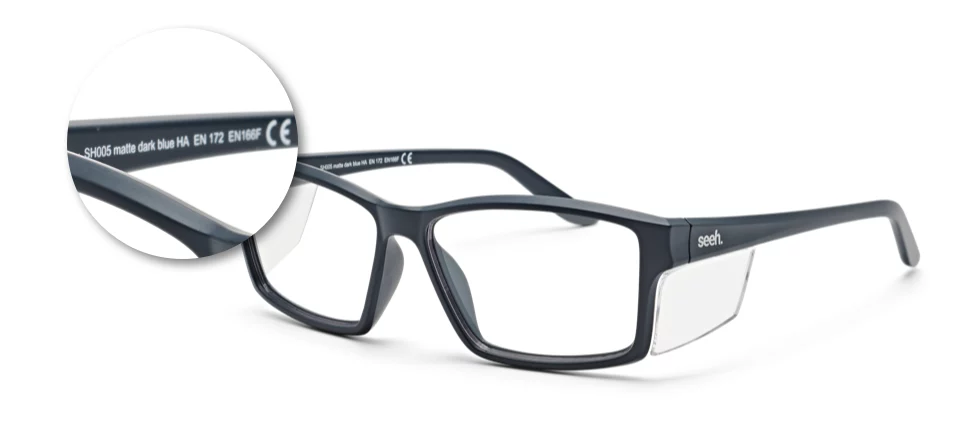
EN 166 specifies the minimum requirements for a series of performance tests. This standard contains a set of requirements that can be considered mandatory. According to the 2018 Working Conditions Guide, frames intended for safety glasses must meet these requirements:
If all of the above requirements are met, the frame is approved. The CE mark may be affixed to this approval. The frames of Seeh's safety glasses always meet these strict standards.
While the European EN 166 standard sets a strict set of requirements for safety glasses, including tests for mechanical strength and chemical protection, the United States has its own standard, known as the ANSI Z87.1. This US standard also highlights the need for impact protection and provides guidelines for different levels of protection depending on the specific risks in the workplace. While both standards aim to ensure user safety, specific testing methods and certification processes vary between regions.
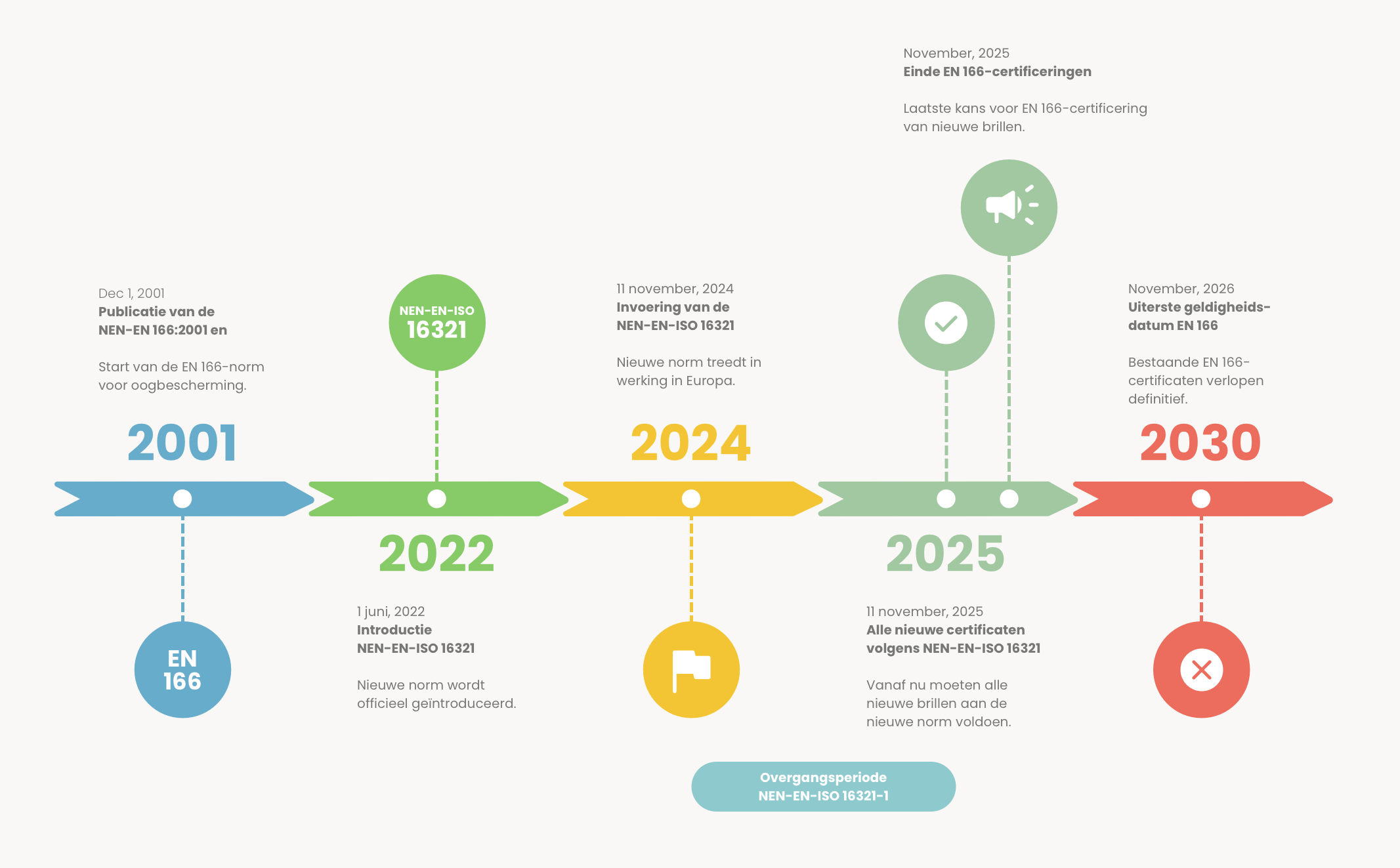
The NEN-EN-ISO 16321-1 standard was introduced in 2021 as a new international standard for eye protection. This standard was officially introduced in Europe in 2024, replacing the older EN 166 standard. To give companies time to adapt, there is a transition period: until November 2025, safety glasses can still be certified under the EN 166 standard. After this date, all new safety glasses must comply with the NEN-EN-ISO 16321-1 standard to be certified. However, glasses that are already certified under EN 166 remain valid until the end of their five-year certification period.
Safety glasses are considered certified when they comply with the EN 166 standard, which means that they have both passed mandatory performance tests and are marked with the CE mark, which indicates that they meet all European safety and health requirements.
Yes, in Europe, it is mandatory that safety glasses comply with the EN 166 standard. This ensures that the glasses provide adequate protection against potential workplace risks, such as mechanical impact and chemical exposure.
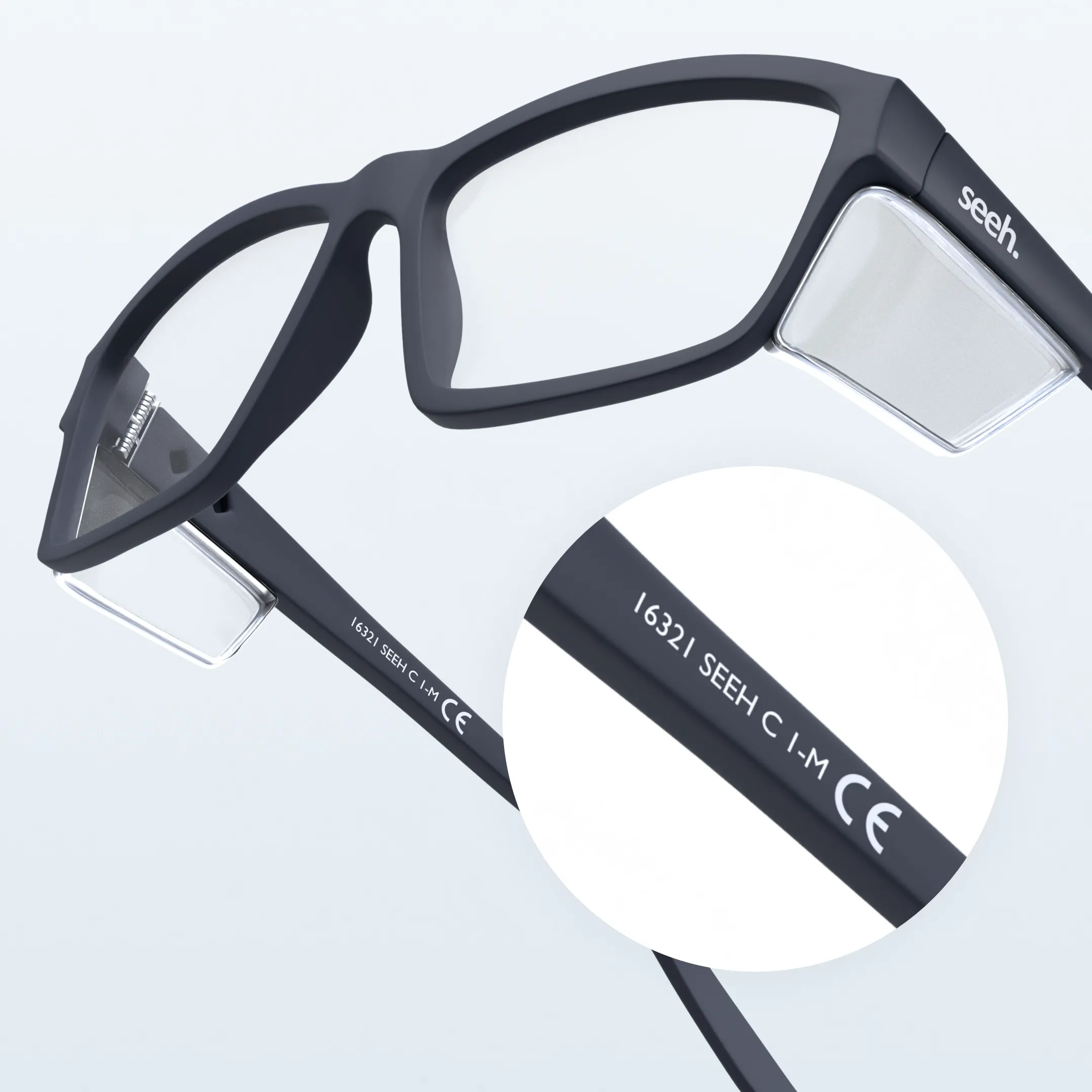
Safety glasses that comply with the EN 166 standard can be identified by the markings on both the lenses and the frame. These include the EN 166 certification number, the manufacturer code, and often additional symbols that indicate specific levels of protection. In addition, the CE mark must be present, which indicates that the product complies with European regulations.

Article by
With more than 20 years of experience, Seeh is your partner in eye and hearing protection. Together with Hans Anders, we easily help companies in the Netherlands and Belgium find customized eye and hearing protection. With our solutions, you ensure that your employees can always work safely and comfortably.
Deel dit artikel met je collega's


.svg)