
6
mins
A full face mask that complies with the NEN-EN 136:1998 standard only offers the promised protection if the mask fully fits the face. As soon as a spectacle wearer wears their own glasses under the mask, that connection expires. The mask leaks and thus the conformity with the standard expires in practice, even if the mask has a valid certificate.


NEN-EN 136:1998 is the European standard for full face masks. The standard sets requirements for the construction, material and density of the mask. A full face mask that complies with this standard has been tested to fully seal the entire face: forehead, cheeks, nose and chin. That seal is not an afterthought. She is the core of protection. A mask with a P3 filter stops dangerous particles, but only if there is no alternative route in. Leakage around the edge makes the filter effect irrelevant.
Ordinary glasses have legs. These legs run along the sides of the head, right through the mask's sealing zone. No matter how thin the legs are, they create a gap between the mask and the skin. The mask therefore no longer closes completely, which leads to leakage. Hazardous substances, vapors or particulate matter can enter through that opening, regardless of the filter in the mask. This is not a theoretical risk. The Netherlands Fire Department describes this in a official guide as a concrete safety risk.
No. This is a common mistake in practice. Mask wearers and employers sometimes deliberately opt for a frame with thin metal legs, assuming that the leakage is then minimal. That may be true in theory, but it does not completely solve the problem.
Indeed, NEN-EN 136:1998 requires a seal that has been tested and proven to be tight. Thin-eared glasses have never been tested as part of that seal. There is no standard that recognizes this as an acceptable solution. The employer who lets his employee work under a full face mask wearing his own glasses is thus not fulfilling his obligations under the Working Conditions Act, even if the legs are as thin as possible.
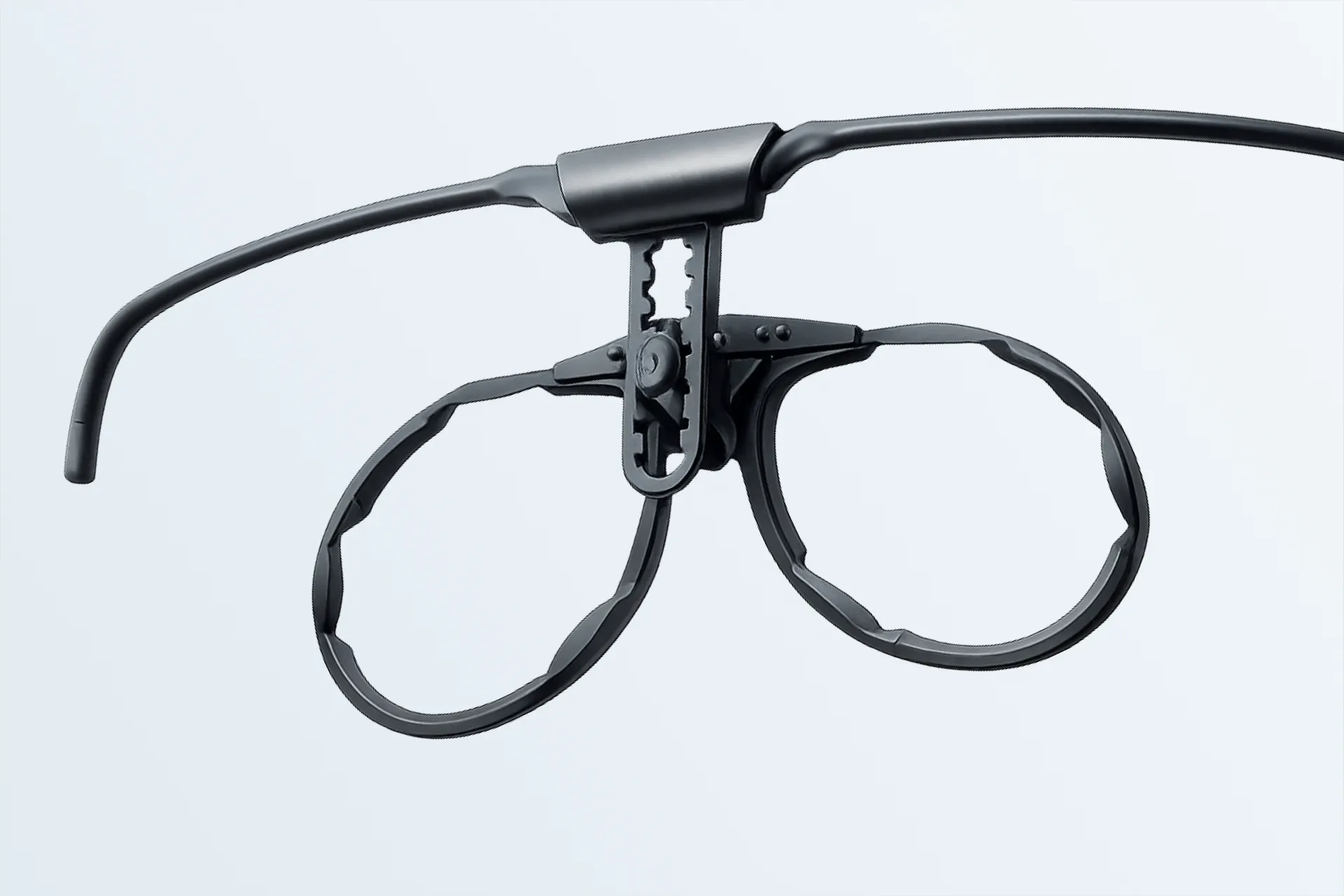
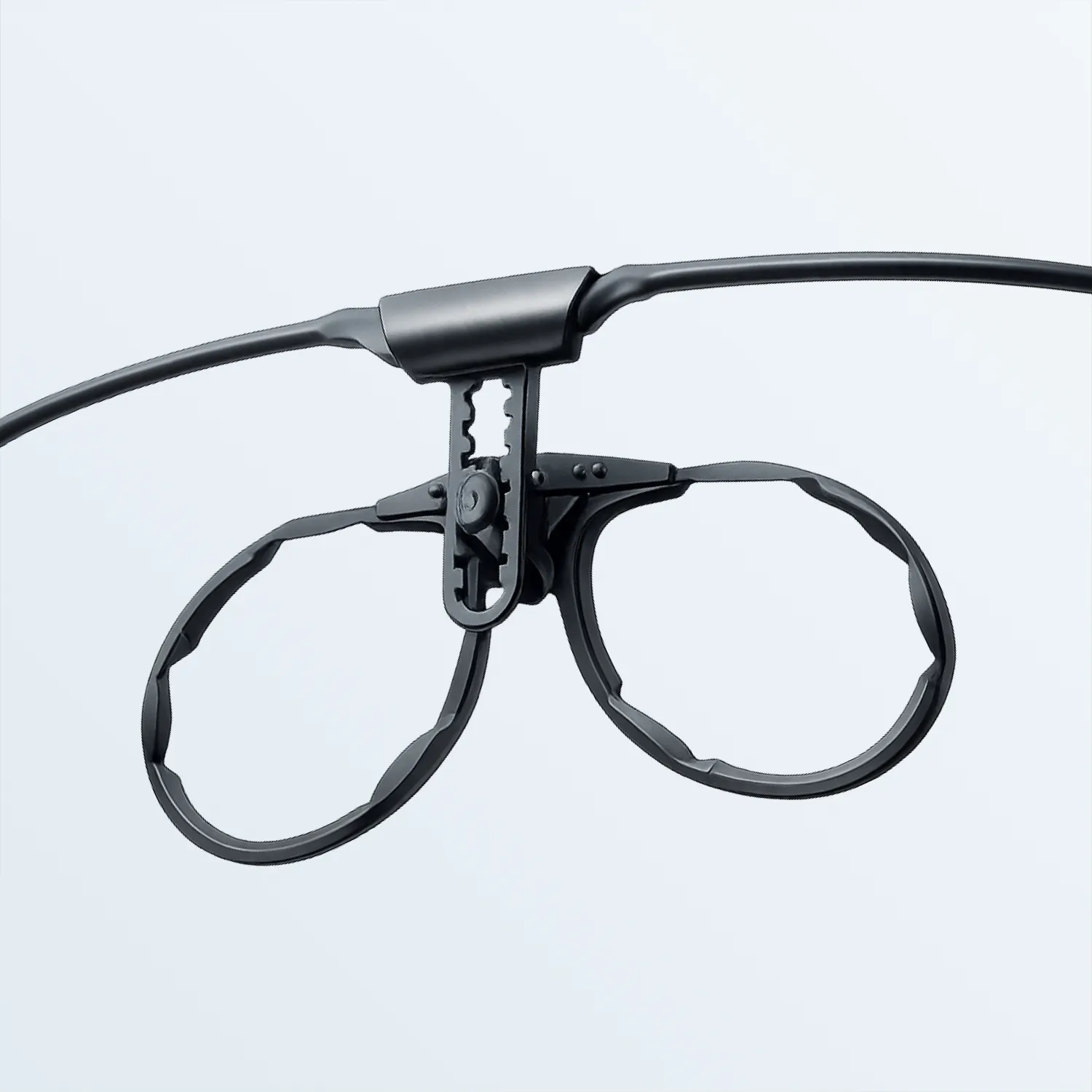
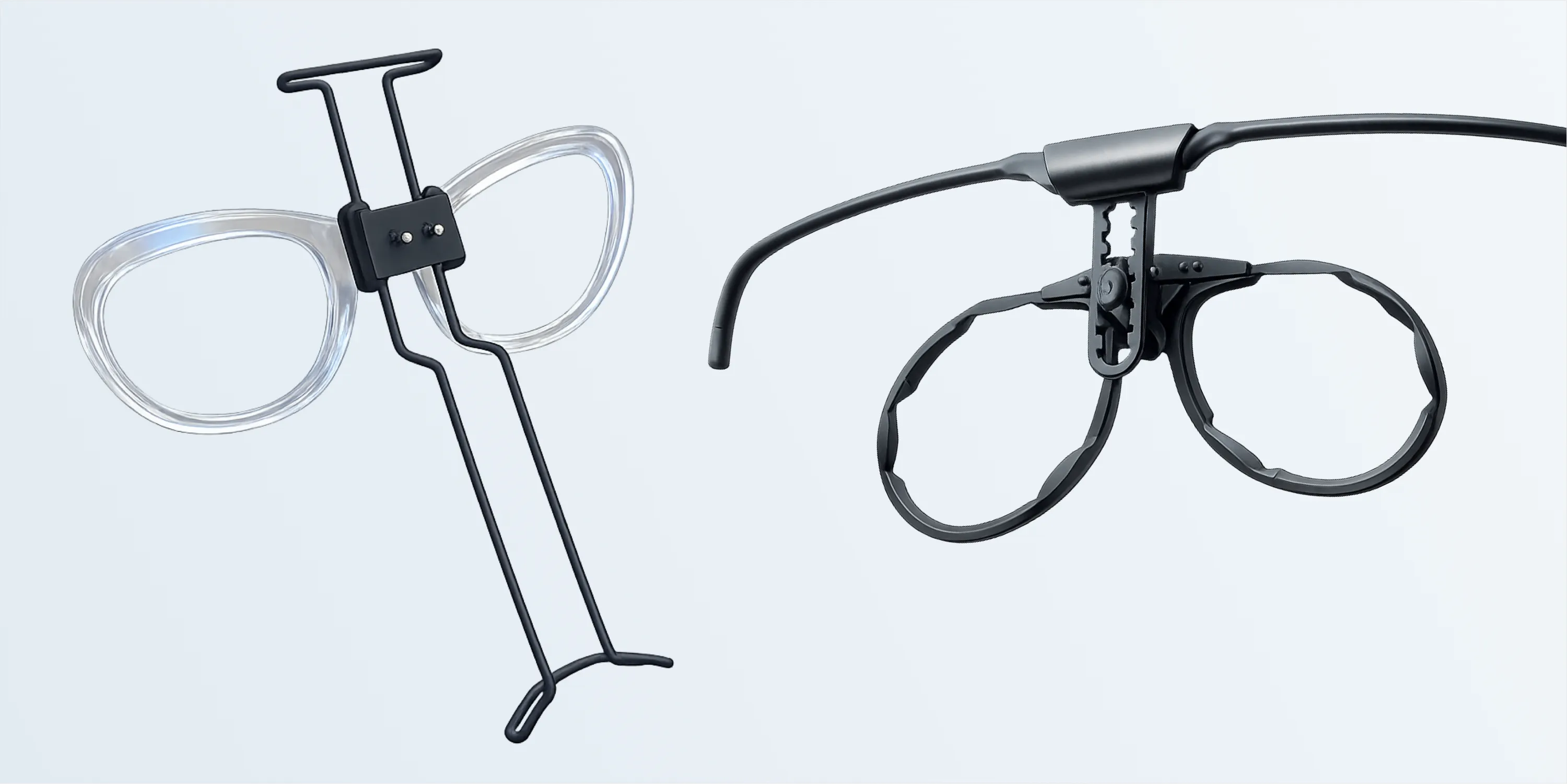
Prescription mask goggles are frames without temples, specifically designed for use behind a full face mask. The frame attaches to the inside of the mask at appropriate connection points. The mask seal remains completely intact. There is no contact between the glasses and the sealing zone.
The lenses are cut to size based on the employee's eye test, including single strength or multifocal design. The frame type depends on the mask model. Not every mask has the same attachment points, so the choice of frame always starts with the mask that the employee wears.
The most used full face masks in the Netherlands come from manufacturers such as MSA Safety and Dräger. Both brands provide specific frames for their mask models. The frame only fits the mask model for which it was developed. Using a generic frame in a mask for which it is not intended is technically incorrect and prohibited. Always check the mask specifications to see if an insert is available for the model in question. The mask supplier can confirm this.
The process starts with an eye test. This measurement determines the strength of the lenses. The correct frame is then selected based on the mask model. The lenses are cut to prescription and placed in the frame. The whole thing comes with instructions for placement in the mask. The average delivery time is 5 to 10 business days. Ordering and invoicing take place centrally, so that the employer has one point of contact for the entire request.
The Working Conditions Act requires employers to provide employees with personal protective equipment that is appropriate to the risks of the workplace and that function properly. A full face mask that leaks through glasses does not comply with that obligation. The employer is responsible for the correct combination of mask and vision correction, not the employee. This also applies if the employee himself states that he is not experiencing a problem. Subjective comfort says nothing about the actual sealing of the mask.
Seeh supplies prescription mask goggles for the most commonly used full face masks. Always on invoice and with a delivery time of 5 to 10 business days. Do you have questions about our prescription mask goggles? Then take contact with our service team. They will be happy to answer any questions you may have.

Article by
With more than 20 years of experience, Seeh is your partner in eye and hearing protection. Together with Hans Anders, we easily help companies in the Netherlands and Belgium find customized eye and hearing protection. With our solutions, you ensure that your employees can always work safely and comfortably.
Deel dit artikel met je collega's


.svg)