5
mins
Many people who work daily at a computer screen will recognize this: a stiff neck, nagging headaches, fatigue, or tension between the shoulder blades. Yet, they don't immediately connect these issues to their screen work.
That's why we spoke with Chris Hellendoorn from Flexor Massage. Chris has over ten years of experience providing chair massages at companies and institutions. He daily massages employees who work at a computer screen and often encounters people suffering from neck and shoulder discomfort.
“You can immediately tell when someone is or isn't wearing prescription computer glasses.”
Chris's story is enlightening, thought-provoking, and clearly demonstrates why good computer glasses are essential for anyone who works daily at a screen.


Chris doesn't even need to touch someone to know where the tension is. If you walk in with hunched shoulders, he immediately notices the tension. These hunched shoulders are not a conscious choice. They develop because people struggle to see their screen clearly. The head unconsciously moves forward, and the shoulders automatically follow.
Anyone who does that five days a week for years on end structurally overstrains the muscles in the upper neck and shoulders, resulting in an increased risk of tension headaches, a stiff neck, and reduced mobility in the head and shoulders.
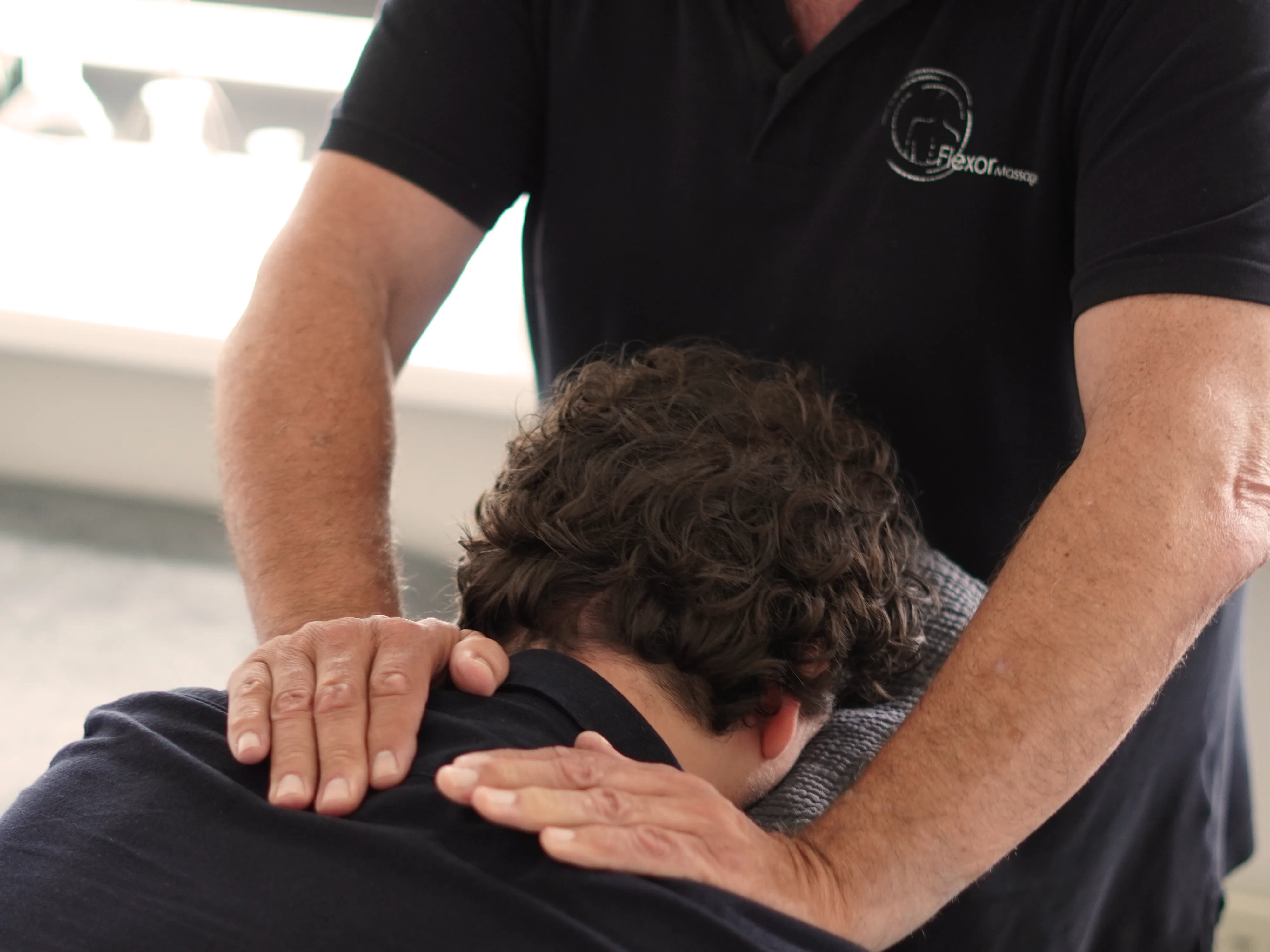
What Chris sees time and again in his practice is how imperceptible the build-up of symptoms is. The mobility of your head and shoulders deteriorates so slowly that you sometimes don't even notice it. Only when someone tries to look over their shoulder in the car and realizes it's difficult does it sink in. By then, the tension has already been building for years.
“By the time people notice it, it's too late.”
The body reacts to pain by avoiding certain movements. But that only makes the problem worse. Less movement means less blood circulation, which leads to the accumulation of waste products in the muscle. These waste products attach themselves to muscle fibers, creating knots. More knots mean more restriction and even less movement. This creates a vicious cycle that becomes increasingly difficult to break.
Older muscles are more susceptible to poor posture than younger muscles, Chris explains. As people age, muscles naturally become tighter, and knots have a greater impact on mobility.
“Young muscles are like a flexible elastic band. If there are two small knots in it, you barely notice it. But a tight, old elastic band with knots? Then you notice it immediately.”
However, Chris doesn't only see these complaints in older employees. As an example, he mentions an IT professional in his early twenties whom he is treating. This person spends all day behind a screen and is virtually never in a good posture: on the train with a laptop, at the office behind his desktop, and at home behind his gaming PC. Only when he sleeps is he not behind a screen.
Statistics reinforce Chris's story. From TNO research it appears that 44% of all workers spend more than six hours a day behind a screen. In some sectors, such as IT and finance, this rises to 90%.
The TNO report also shows that the consequences are not mild. Of the employees who work more than six hours a day behind a screen, 45% report having CANS complaints (Complaints of Arm, Neck, Wrist, or Shoulder). More complaints mean more absenteeism, which only increases the pressure on colleagues who are present.
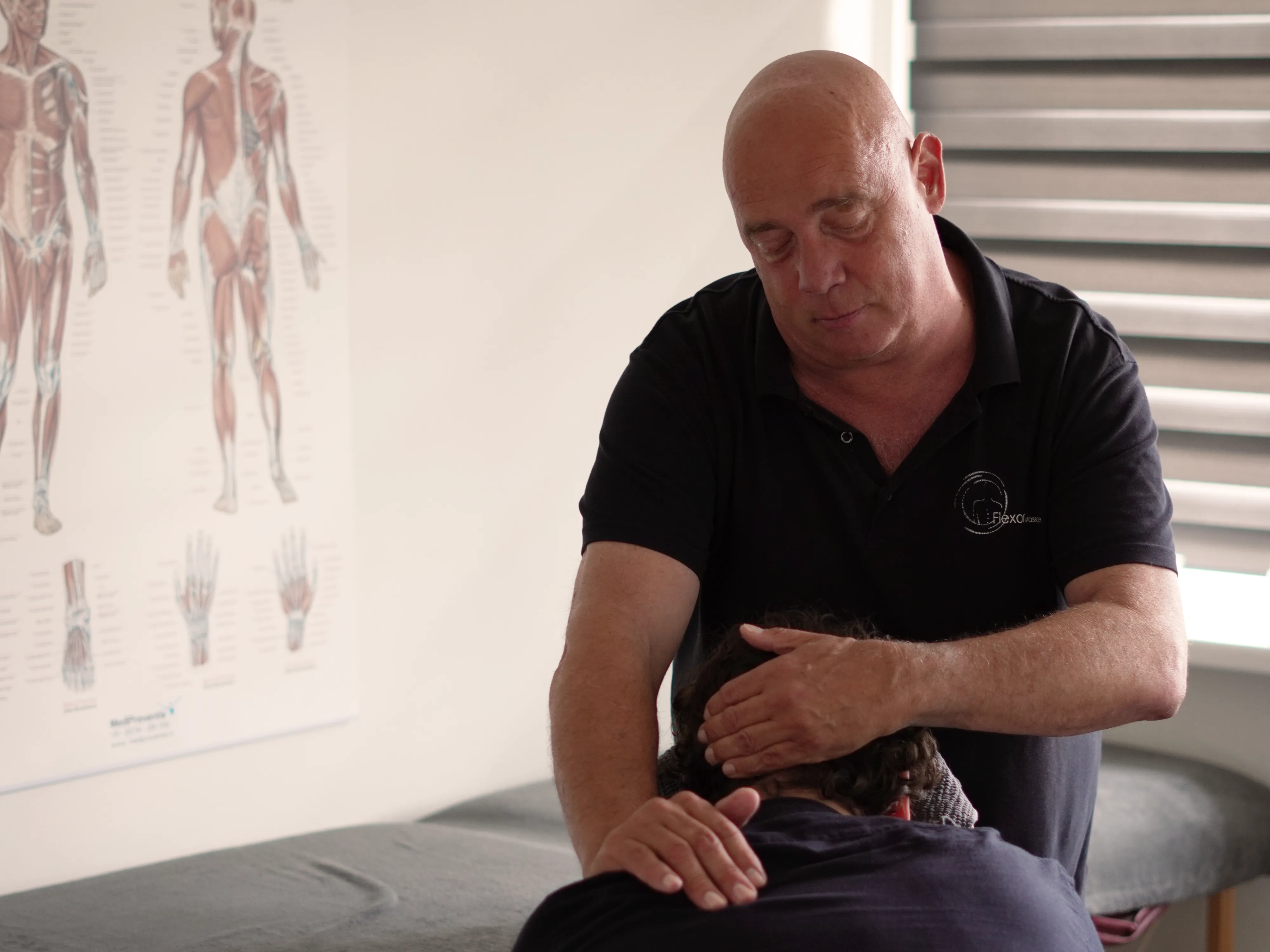
There isn't one standalone measure that completely solves the absenteeism problem. Chris is clear about this: you need a complete ergonomic package. It starts with an ergonomic workstation. Ensure an adjustable chair and a desk at the correct height, and set the screen at eye level at a distance of fifty to sixty centimeters. Additionally, movement is essential. Stand up regularly, get yourself a cup of coffee, and move around in between tasks.
“People who sit all day don't realize they actually have a heavily demanding job.”
Many employees think: how hard can sitting behind a desk really be? Therefore, creating awareness is essential. Anyone who understands what happens to their muscles after hours behind a screen is more likely to adjust their behavior.
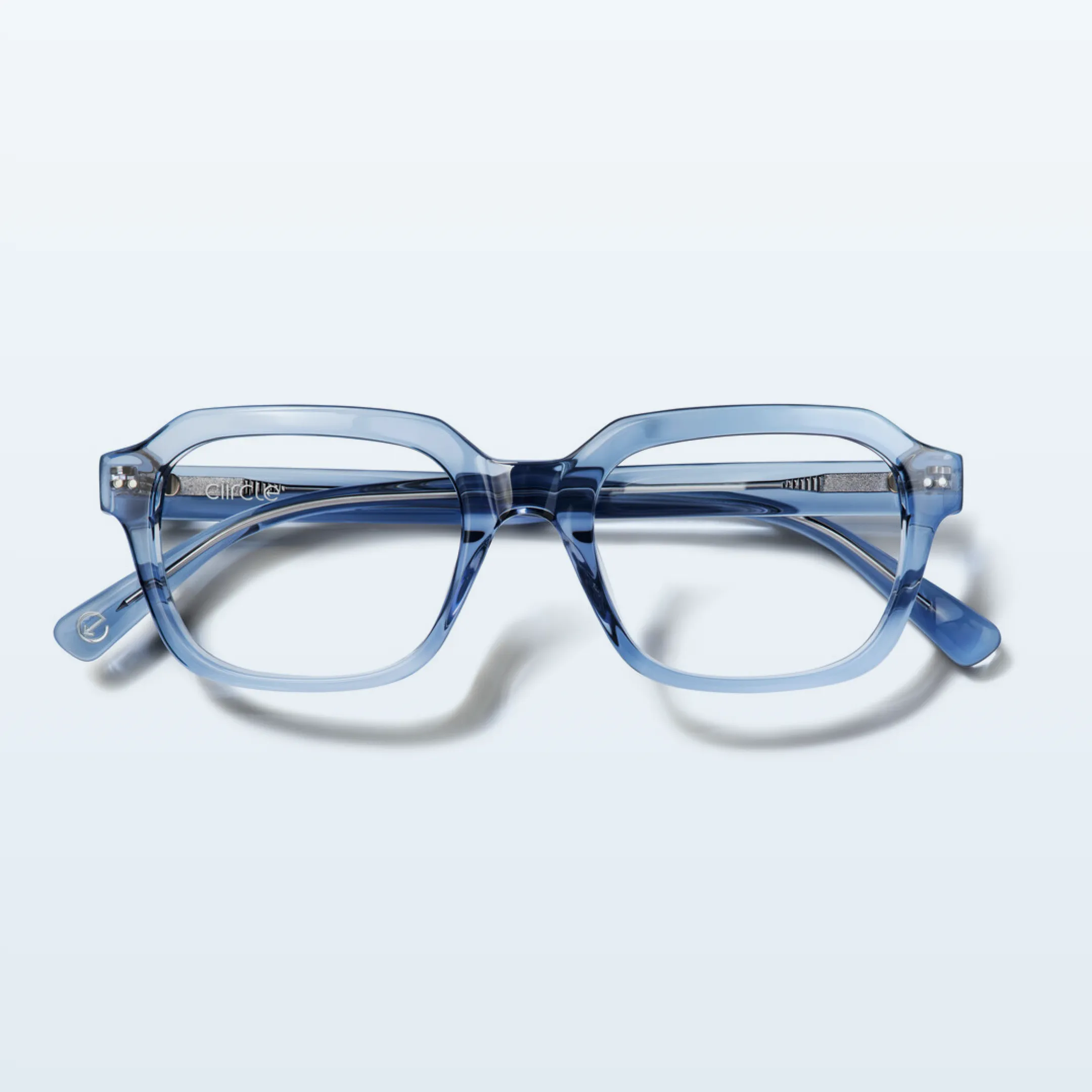
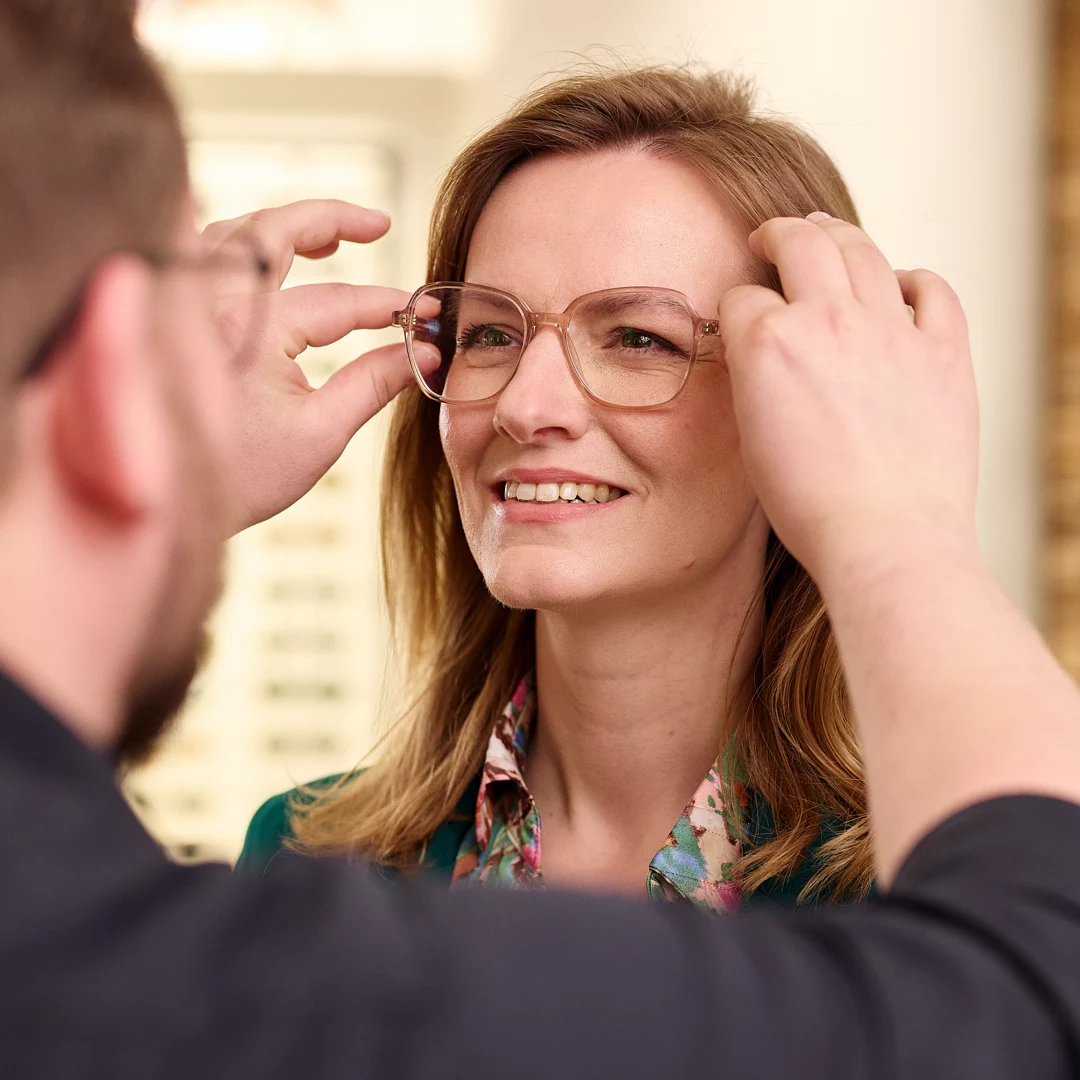
According to Chris, computer glasses are an absolute must in an ergonomic toolkit. During office massages, he immediately notices whether someone is wearing computer glasses or not. The tension in their neck tells him enough.
Computer glasses remove the trigger that sets a whole chain of events in motion. Anyone who struggles to see the screen clearly unconsciously adjusts their posture. Shoulders rise and the head moves forward. Glasses specifically designed for the exact viewing distance prevent precisely that.
Computer glasses are therefore not a luxury, but a tool to prevent absenteeism. The Occupational Health and Safety Act obliges employers to reimburse the cost of computer glasses when an employee needs them for their work. They belong in the same package as an ergonomic chair and an adjustable desk.
Chris summarizes it as he sees it in practice: if you already have symptoms, you're essentially too late. The most common mistake is waiting until symptoms appear. By then, the body has often learned compensatory behaviors over years that are difficult to break. Prevention is not only better for the employee, but it's also economically sensible for the employer.
In this regard, computer glasses are one of the simplest and most direct steps. They remove the main trigger, namely poor vision, before tension builds up in the neck and shoulders.

Nek- en schouderklachten door beeldschermwerk bouwen zich zo langzaam op dat je ze vaak niet direct aan je werk koppelt. Signalen om op te letten zijn een stijve nek aan het einde van de werkdag, spanning tussen de schouderbladen, moeite met over je schouder kijken in de auto of op de fiets en terugkerende hoofdpijn. Massagetherapeut Chris ziet het al aan de houding van mensen als ze binnenlopen: opgetrokken schouders zijn een directe indicator. Komen deze klachten vaker voor op werkdagen dan in het weekend? Dan is beeldschermwerk waarschijnlijk een belangrijke oorzaak.
Ja, en dat is niet alleen theorie. Massagetherapeut Chris voelt tijdens kantoormassages direct of iemand een beeldschermbril draagt. Mensen met een beeldschermbril hebben merkbaar minder spanning in de nek. De verklaring is eenvoudig: wie het scherm moeiteloos scherp ziet, hoeft zijn hoofd niet naar voren te bewegen en trekt zijn schouders niet op. Daarmee verdwijnt de belangrijkste trigger voor nek- en schouderklachten. Een beeldschermbril lost niet alles op, maar is wel een van de meest directe en eenvoudige stappen binnen een ergonomische aanpak.
Ja. De Arbowet verplicht werkgevers om een beeldschermbril te vergoeden wanneer een medewerker die nodig heeft voor zijn werk. Het gaat daarbij om een functioneel hulpmiddel, geen luxe. De werkgever hoeft geen duur of stijlvol model te vergoeden, maar wel wat medisch noodzakelijk is voor het uitvoeren van het beeldschermwerk.
Article by
With more than 20 years of experience, Seeh is your partner in eye and hearing protection. Together with Hans Anders, we easily help companies in the Netherlands and Belgium find customized eye and hearing protection. With our solutions, you ensure that your employees can always work safely and comfortably.
Deel dit artikel met je collega's


.svg)