5
mins
An employee is on the phone in the production hall. His team leader calls out to him. He doesn't catch what was said, pulls his earplug out, and asks for it to be repeated. Afterward, he leaves it out because it makes talking easier. In this article, you will learn what a filter does, why both too little and too much attenuation pose a risk, and how to choose the right filter for every job role.


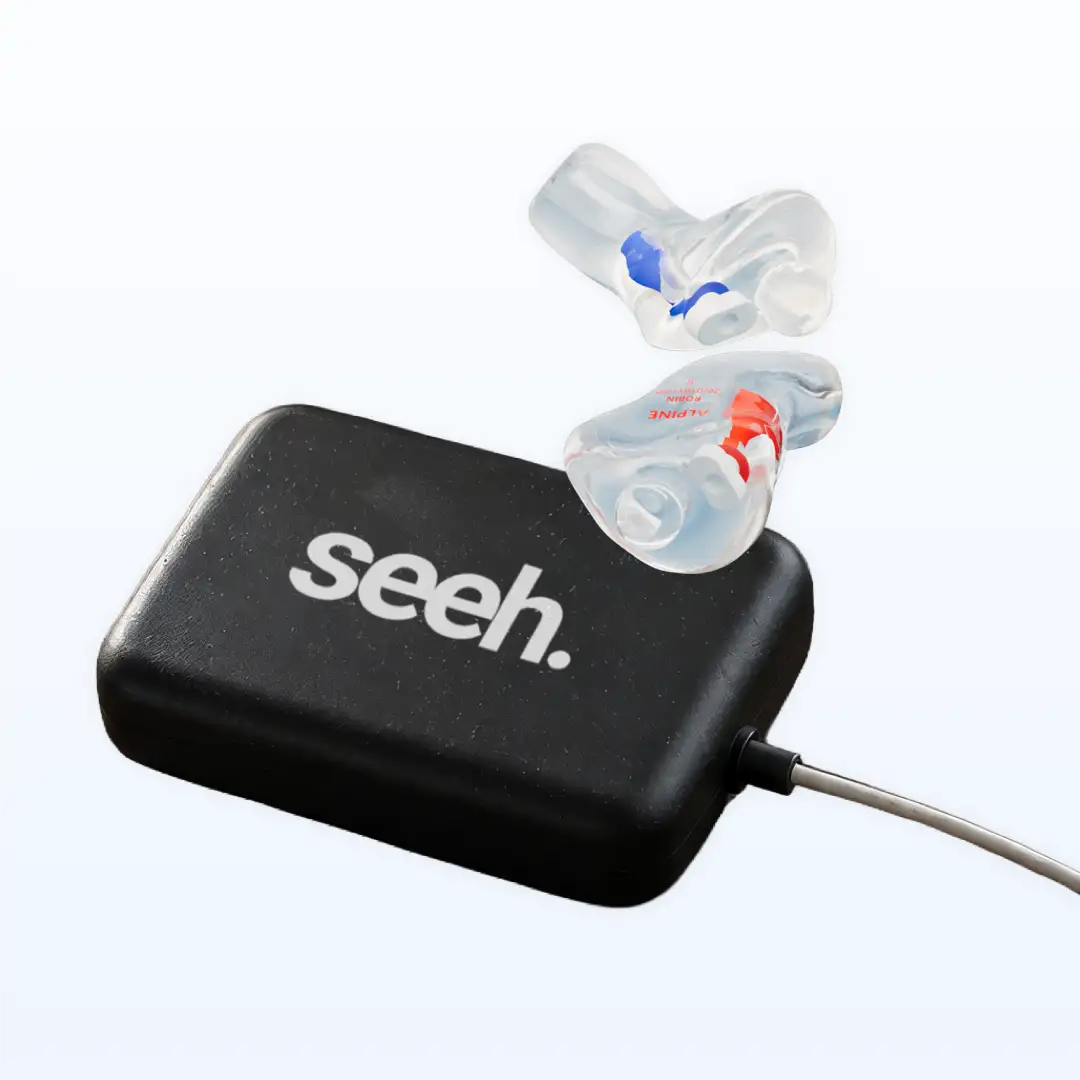
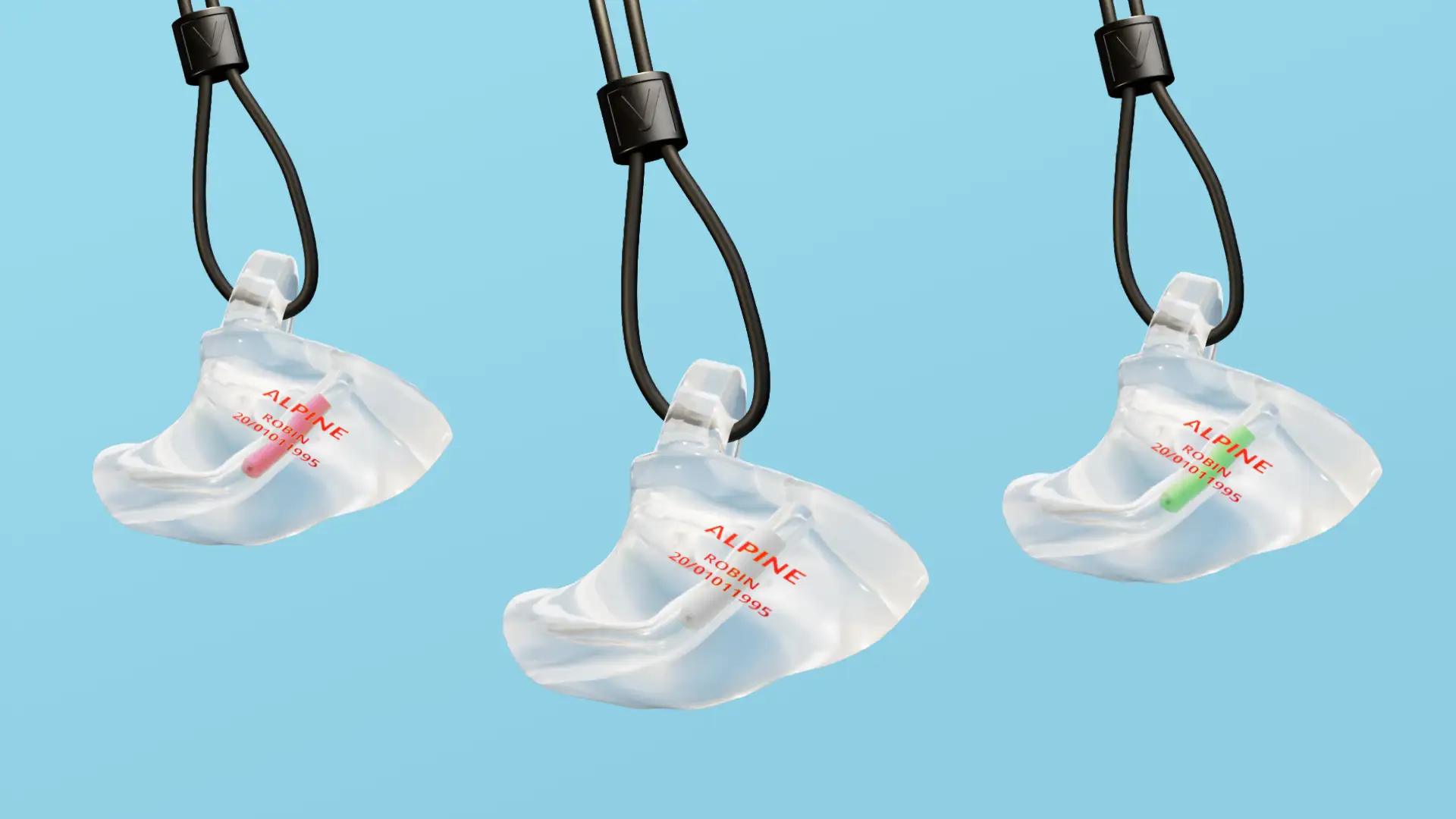
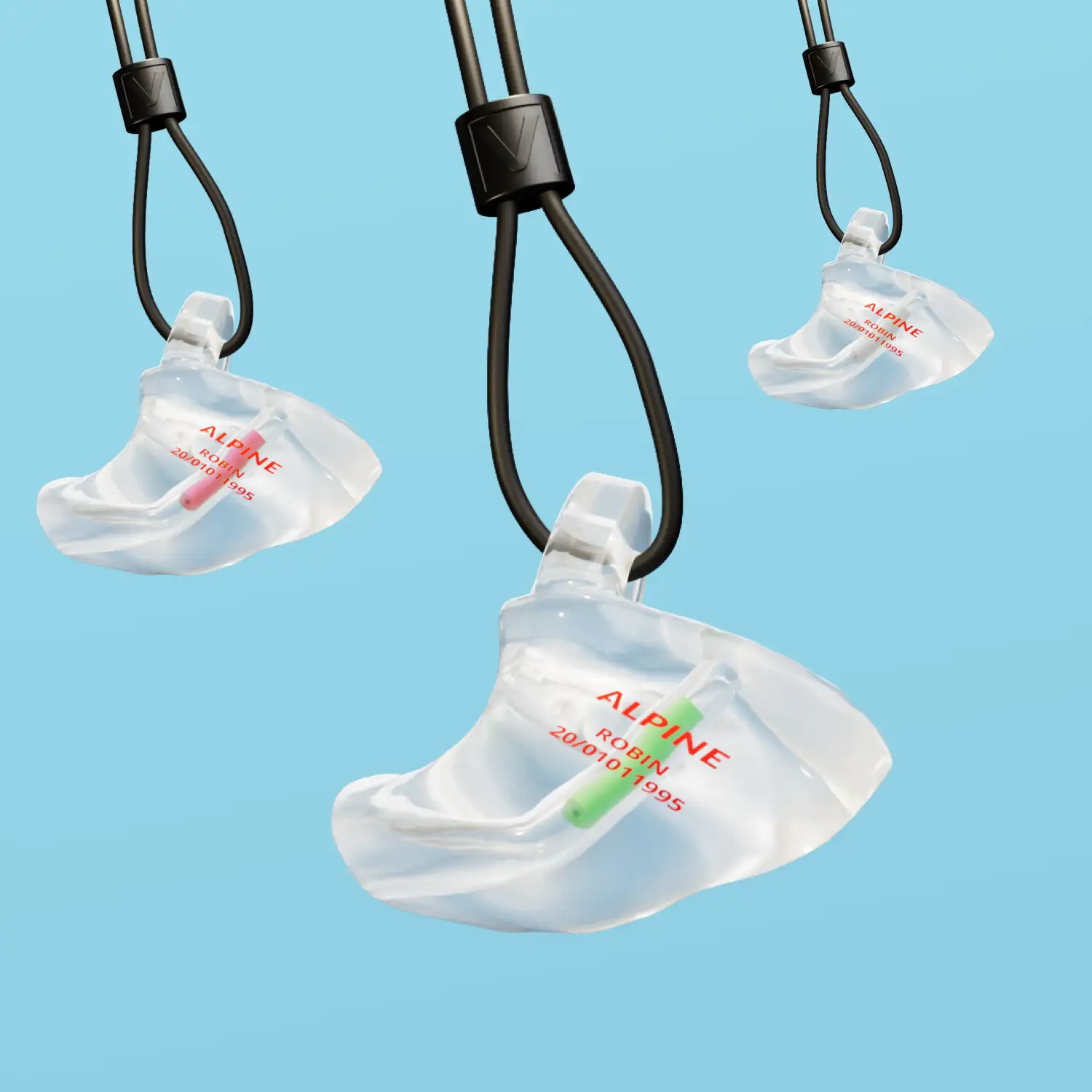
An earplug consists of two parts, each with its own function. The earplug itself is custom-made from an impression of the ear canal, ensuring a proper fit and comfort. Inside the earplug is a small channel containing the filter. This filter determines how much sound is allowed through.
This is also the most important difference compared to a standard earplug. A standard plug seals the ear completely, whereas an earplug with a filter allows sound to pass through in a controlled manner. This keeps speech easier to understand and makes the ear feel less blocked. Because the fit is fixed, you don't choose the level of attenuation with the earplug itself, but with the filter.
Noise is not the same everywhere. A welder hears different sounds than a forklift driver. A construction worker deals with short, loud peaks of noise, while an employee in the packaging department hears a constant hum all day long.
Sound varies in intensity, but also in pitch. Some machines produce mostly a low hum, while others emit a high, sharp tone. Filters do not attenuate all these tones equally. That is why, in addition to the SNR, manufacturers also list H, M, and L values. These indicate how well a filter attenuates high, medium, and low frequencies.
Hearing damage occurs gradually and is permanent. You only notice it when it is too late. The Working Conditions Decree sets the threshold for measures at 80 dB(A). From this level, you as an employer must provide hearing protection. From 85 dB(A), wearing it is mandatory.
What many people underestimate is how quickly the risk increases. At 80 dB, you can work for about eight hours without hearing damage. For every 3 dB increase, that time is halved. At 83 dB, it is four hours; at 86 dB, two hours; and at 89 dB, only one hour. A filter that provides just a few decibels too little attenuation makes a big difference over a full workday.
This is where things often go wrong in practice. The logic seems sound: more attenuation means more protection. That is true on paper, but it works differently on the work floor.
A filter that is too strong makes it difficult for employees to hear their colleagues. They are less able to hear warning signals, such as a reversing forklift or an alarm. Many people feel cut off from their surroundings. Some can no longer hear their machine properly, even though they rely on the sound to know if everything is running smoothly.
The result is predictable: the earplug comes out. Just for a quick chat, or to check something. Those short moments add up. An earplug that is out for fifteen minutes every hour loses a large part of its protective effect.
Therefore, the guideline is that the sound reaching the ear after attenuation should be between 70 and 80 dB. Anything higher is unsafe. Anything lower is usually unnecessary and increases the chance that employees will not wear the protection.
At Seeh, every earplug starts with the question of where your employee works. We provide advice on the right filter choice for each role, based on the work environment and the noise data you have. The fitting takes place at one of over 400 Hans Anders locations, close to home or work. Upon delivery, we check that the earplug provides a proper seal. This way, you can be sure that the protection works as intended.

Article by
With more than 20 years of experience, Seeh is your partner in eye and hearing protection. Together with Hans Anders, we easily help companies in the Netherlands and Belgium find customized eye and hearing protection. With our solutions, you ensure that your employees can always work safely and comfortably.
Deel dit artikel met je collega's