6
mins

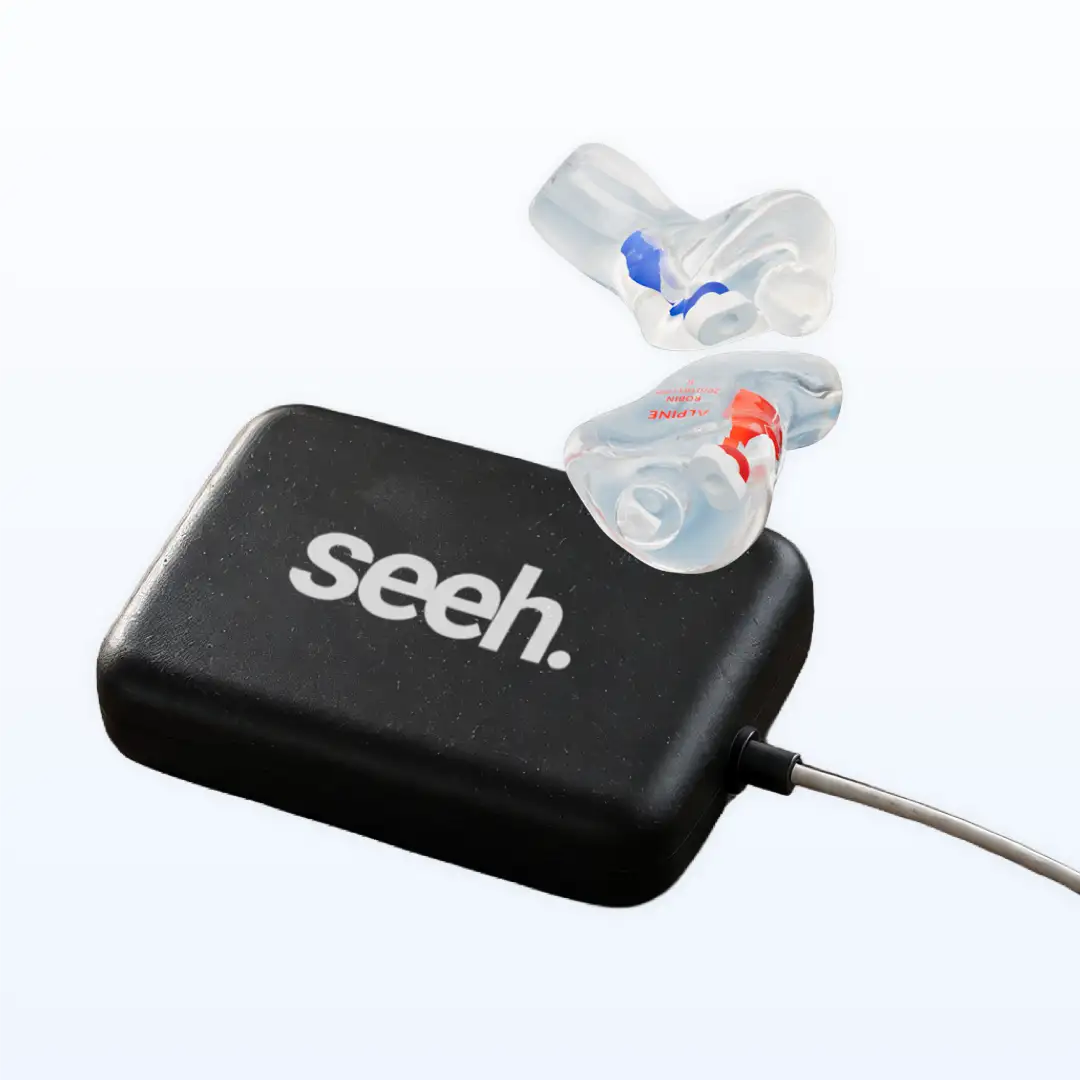
For most situations, the answer is simpler than you might think: custom-molded hearing protection is the smartest choice. Custom-molded hearing protection (otoplastics) is the only type that combines reliable protection with superior comfort. In this article, we compare the different types of hearing protection and explain step-by-step how to choose the right option for your work environment.


The Working Conditions Act sets very clear limits. As soon as your employees are exposed to noise levels of 80 dB(A) or higher, you as an employer are obliged to make hearing protection available. From 85 dB(A), wearing it is even mandatory. For comparison: 80 dB(A) is equivalent to busy city traffic, and a passing truck is already at 85 dB(A). Consequently, in construction, industry, and logistics, these maximum noise levels are reached or exceeded daily.
Before you can make an informed choice, you need to know how much noise your employees are exposed to. The legally required Risk Inventory and Evaluation (RI&E) includes a noise analysis if noise levels above 80 dB(A) may occur. We recommend having the measurements carried out by a certified occupational health service or safety expert. They will map out the peak values and the average exposure over a workday. This determines what attenuation level the hearing protection must offer and, consequently, which type is most suitable for your situation..
There are four common types of hearing protection for the workplace: disposable earplugs, reusable earplugs, earmuffs, and custom-molded hearing protection. These types of hearing protection differ in purchase price, ease of use, and the protection they offer in practice. Below is an overview of the most common types.
A common misconception is that noise-cancelling headphones function as hearing protection. That is not the case. Active noise-cancelling technology electronically attenuates ambient noise for listening comfort, but does not offer certified protection against harmful noise levels. This type of headphones does not carry a CE mark as personal protective equipment and does not comply with the European standard EN 352. In a workplace with mandatory hearing protection, this is therefore not a valid alternative.
If employees hear too little of their surroundings, it actually increases safety risks. For example, they may no longer hear warning signals. Custom-molded earplugs are available with interchangeable filters. A filter with low attenuation is suitable for environments with varying noise levels where communication is important. A filter with higher attenuation is appropriate for continuous high-level noise. The choice depends on the SNR value resulting from the RI&E measurement. Do you have questions about which filter is suitable for your situation? Our specialists will be happy to help you choose the right filters.
The optimal custom-molded hearing protection for business varies by industry. Below are the most common work situations.
Construction workers are exposed to varying noise sources: from jackhammers and excavators to compressors and saws. Custom-molded earplugs with a medium filter offer the right balance between protection and communication, allowing colleagues to still understand each other well on the construction site.
In factories and production halls, noise exposure is often constant and high. A longer workday in a noisy environment requires a higher attenuation value and wearing comfort that lasts all day. Custom-molded earplugs are the most reliable choice for this.
Logistics employees work alternately in quiet and noisy zones, such as loading docks, sorting centers, and cold storage. Interchangeable filters allow the attenuation to be adjusted to the situation. Earmuffs are less practical here, especially when driving a forklift or wearing a helmet.
Saws, milling machines, and planers produce peaks in the high-frequency spectrum that are particularly harmful to hearing. Exposure is often intensive and prolonged. Custom earplugs with a higher attenuation value offer the necessary protection here, without compromising comfort.
The noise level of scrubbers, vacuum cleaners, and high-pressure cleaners is often underestimated. Since cleaners often work alone, communication is less of a requirement. Light to medium-duty protection with a good fit is sufficient and prevents employees from omitting their earplugs.
The research report Tired of Noise (2025) shows that half of all office workers are annoyed by talking colleagues, noisy equipment, and colleagues on the phone. All these disruptive sounds lead to various problems in the workplace. Focus custom earplugs offer a solution.
Custom hearing protection has a higher initial purchase price than, for example, disposable earplugs. However, with proper maintenance, custom earplugs can last for several years. This makes the daily cost per employee lower than it might initially seem. Furthermore, indirect costs decrease: less absenteeism due to hearing complaints, reduced liability risks, and no recurring purchase of disposable materials. Custom hearing protection is not an expense, but an investment in the employability and health of your people.
Custom hearing protection is the best choice in almost all situations where employees are regularly exposed to noise. Custom earplugs effectively address all three determining factors: reliable and certified attenuation, a truly snug fit, and sufficient wearing comfort to ensure compliance. Earmuffs have a place for short-term exposure. Disposable earplugs can serve as a temporary solution. But for a sustainable and effective occupational health and safety policy, custom hearing protection is an investment that pays for itself.

As an employer, you are required to make hearing protection available from 80 dB(A). From 85 dB(A), wearing it is mandatory. This applies to all forms of approved hearing protection, including custom-molded earplugs. This obligation is based on the Working Conditions Act, supplemented by the Working Conditions Decree and European Directive 2003/10/EC.
Standard disposable earplugs are one-size-fits-all and are often inserted incorrectly, providing less protection than their stated attenuation value. Custom-molded earplugs are made based on an impression of the individual wearer's ear canal. This provides a reliable seal, greater wearing comfort, and the ability to change filters based on the work situation.
With proper use and an annual leak test, custom earplugs last an average of three to five years. The cartilage in the ear canal slowly changes over the years, which can eventually compromise the fit. The annual seal check identifies this promptly.
Article by
With more than 20 years of experience, Seeh is your partner in eye and hearing protection. Together with Hans Anders, we easily help companies in the Netherlands and Belgium find customized eye and hearing protection. With our solutions, you ensure that your employees can always work safely and comfortably.
Deel dit artikel met je collega's


.svg)