3
mins
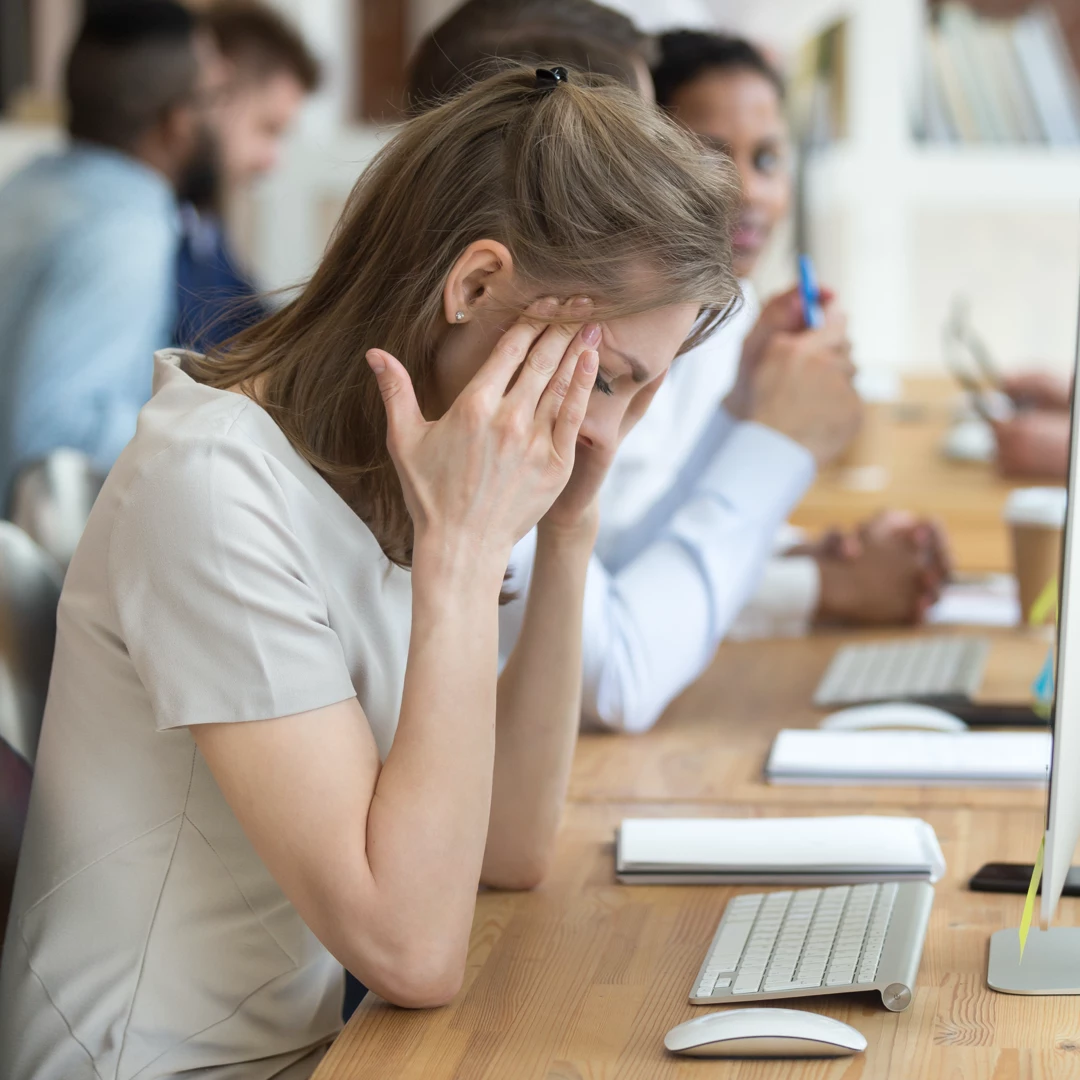
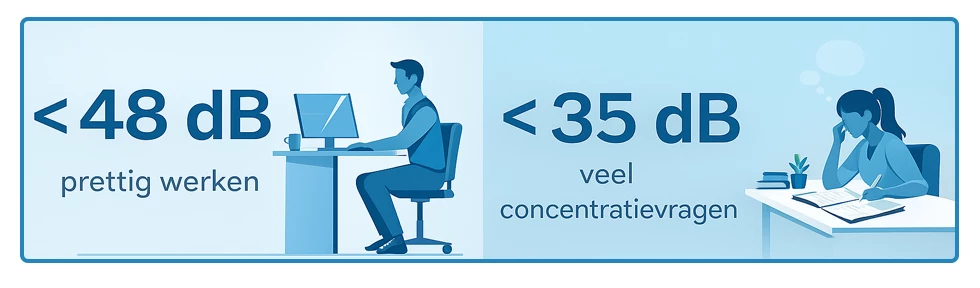
Did you know that in the Netherlands, more than 900,000 people work every day in an environment where there is actually too much noise, according to Veiligheid.nl? Very much. And it's not about extreme noise. It's just the usual office noises that add up: colleagues talking, phones ringing, devices buzzing. From research by the Eindhoven University of Technology It appears that people work best below 48 dB, and even below 35 dB for concentrated work. In many offices, the noise is far above that. If that's the case every day, your head gets full faster. People get tired, have less overview and make more mistakes. If the noise persists day after day, someone gets to a point where it can't be maintained anymore. Then the work pace drops and sometimes even the employee himself. That is why annoying noise is not only a source of annoyance, but a risk that should not be underestimated.


Annoying noise is sound that does not have to be massive for the hearing, but does disturb attention. According to research by the FNV talking colleagues, phones, alarms and devices are the biggest sources of nuisance. This type of noise usually occurs at levels between 45 and 60 dB. The brain has to constantly filter what is relevant in the zone, which costs a lot of energy.

According to the program's final report 'What should it be like in the workplace? ' works through too much background noise in many ways.
Research by TU Eindhoven recommends noise levels below 48 dB for regular work and below 35 dB for tasks that require a lot of concentration. Nuisance often occurs between 45 and 60 dB. Harmful levels only start at 80 dB (A) under the Working Conditions Act, but that does not mean that everything below is healthy. The standard only protects against hearing damage, not fatigue or stress.
You don't have to do a major renovation to make it noticeably quieter. A few practical steps already help to prevent the risk of stress, overload and ultimately absenteeism.
Teams that tackle this together actually always notice an immediate difference: more rest, more focus and a lot more fun at work.

Article by
With more than 20 years of experience, Seeh is your partner in eye and hearing protection. Together with Hans Anders, we easily help companies in the Netherlands and Belgium find customized eye and hearing protection. With our solutions, you ensure that your employees can always work safely and comfortably.
Deel dit artikel met je collega's


.svg)